Call Us: 615-422-4878

Why Do Compression Socks Roll Down? Common Causes and Fixes
Why Do Compression Socks Roll Down? Common Causes and Fixes
Compression socks are supposed to stay in place, so it can be frustrating when they start sliding down your leg or gathering around your ankle. Besides being annoying, a sock that rolls or bunches may not provide compression as intended.
The good news is that rolling usually has a reason behind it. Sizing, application, fabric, and even the shape of your leg can all affect how well a compression sock stays put.
The Sock May Be the Wrong Size
One of the most common reasons compression socks roll down is an incorrect fit. Compression socks are designed to fit closely against the leg, and choosing the wrong size can affect how the garment sits throughout the day.
A sock that is too large may not have enough tension to stay in place. On the other hand, a sock that is too small can feel overly tight and may bunch as you move.
Check the manufacturer's sizing chart rather than relying only on your usual shoe or clothing size. Depending on the style, measurements such as ankle circumference, calf circumference, and leg length may be important.
They May Not Be Put On Correctly
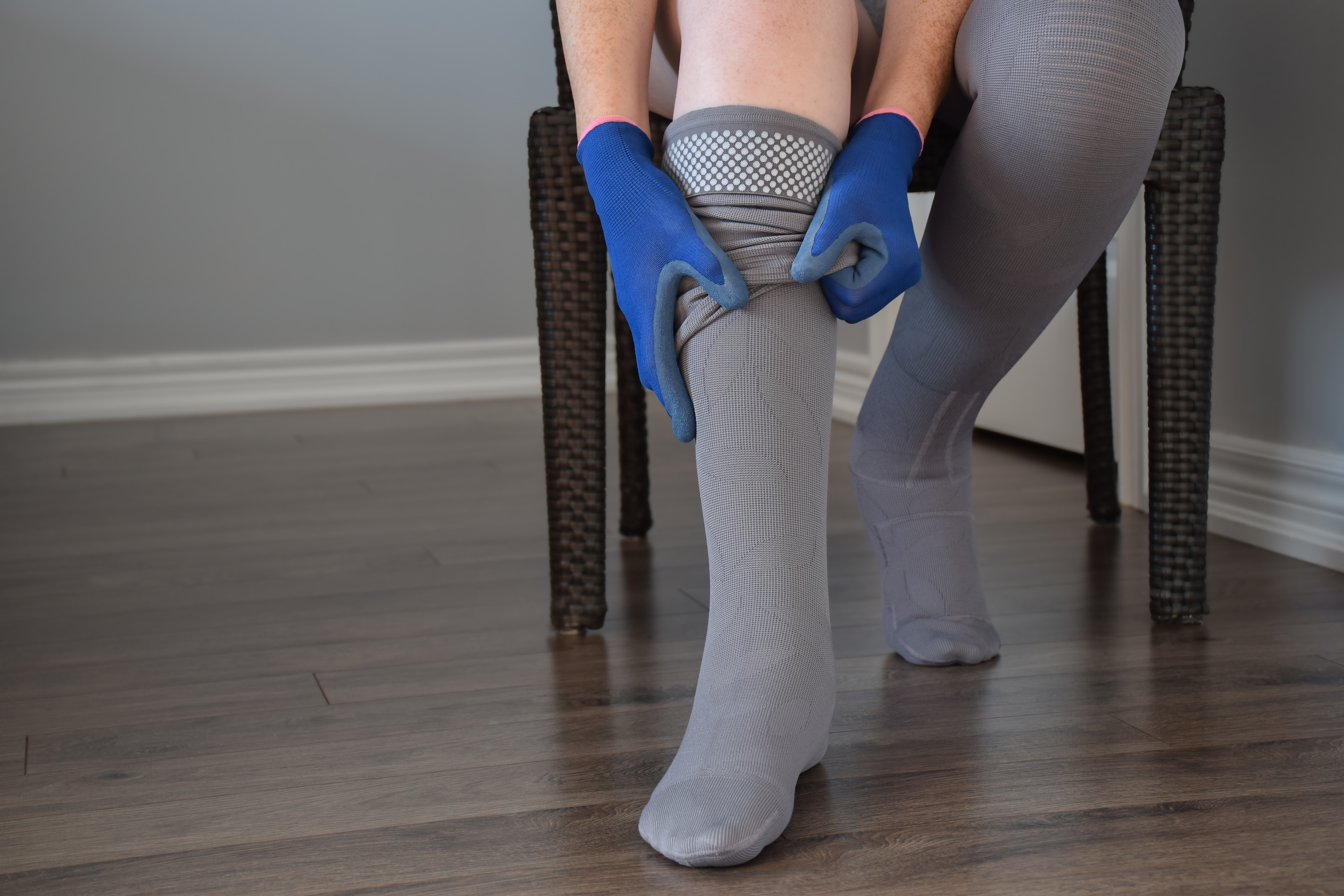
Compression socks aren't quite like ordinary socks. Pulling them on quickly and leaving excess fabric gathered around the ankle or calf can create folds that eventually turn into bunching or rolling.
Instead, work the sock gradually up the leg. Make sure the fabric is distributed evenly and that there aren't wrinkles or twisted sections.
For tighter compression garments, using gloves or a donning aid can sometimes make application easier and help you position the sock more evenly.
Avoid Folding the Top Down
It may seem natural to fold down a compression sock if the top feels uncomfortable, but creating a folded band can change how the garment applies pressure.
Compression socks are designed to be worn at their intended height. Folding the top over can create a tighter area where the fabric is doubled, which may contribute to discomfort, bunching, or uneven pressure.
If the top of the sock consistently feels uncomfortable, it may be worth checking the size and style rather than folding it down.
Fabric and Wear Can Make a Difference
Compression socks don't last forever. With regular washing and wear, the fibers can gradually lose their original elasticity. As the garment becomes less supportive, it may not stay in place as well as it once did.
Pay attention to changes in the sock itself. If it has become noticeably loose, stretched out, thin, or difficult to keep in position, it may simply be reaching the end of its useful life.
Following the manufacturer's washing and drying instructions can help preserve the fabric and elasticity for as long as possible.
Your Leg Shape Can Affect the Fit
Not every leg has the same shape, and that can affect how a compression sock sits. Changes in circumference between the ankle and calf, swelling, or differences in the shape of the leg can all influence how the garment stays in place.
This is one reason a compression sock that works perfectly for one person may not work as well for someone else.
If standard socks repeatedly roll down despite being the correct size and properly applied, a different style or length may provide a better fit.
Common Signs Your Compression Socks Aren't Fitting Properly
Rolling is only one indication that a compression sock may not be fitting correctly. Watch for other signs that the garment isn't sitting as it should:
- Frequent bunching or wrinkling
- The sock repeatedly sliding down during normal activity
- Pinching or digging around the top of the sock
- Excess fabric around the ankle or calf
- Persistent discomfort while wearing the socks
- Difficulty getting the sock evenly distributed over the leg
If these problems continue, review the sizing instructions and application method for the specific garment.
How to Help Keep Compression Socks in Place
A few simple habits can make a difference:
- Measure your leg according to the manufacturer's instructions.
- Choose the size that matches your measurements rather than guessing.
- Put the sock on carefully and smooth out wrinkles.
- Wear the sock at its intended height.
- Avoid folding or rolling the top down.
- Replace socks that have become stretched or worn.
- Follow the recommended care instructions when washing them.
The goal is for the compression sock to sit smoothly against your leg without constantly needing to be pulled back into place.
When to Reconsider the Style or Fit
If your compression socks continue to roll down even after you've checked the size and application, the particular style may simply not work well for your leg shape or needs.
Different compression socks have different lengths, materials, top bands, and construction. A change in style may make more of a difference than repeatedly adjusting the same pair throughout the day.
If you have been prescribed compression therapy, follow your healthcare provider's recommendations about the appropriate compression level and garment type.
Bottom Line: Compression socks can roll down because of incorrect sizing, improper application, worn-out fabric, or a mismatch between the garment and your leg shape. A properly fitted sock should sit smoothly and securely without excessive bunching, pinching, or repeated slipping.
November 1, 2026
|
View: 335
|
Categories: Compression Therapy
| Tags: <a class="mp-info" href="https://www.compressionguru.com/latestnews/tag/performance-compression">performance compression</a>, <a class="mp-info" href="https://www.compressionguru.com/latestnews/tag/compression-therapy">compression therapy</a>, <a class="mp-info" href="https://www.compressionguru.com/latestnews/tag/diabetic-foot-care">diabetic foot care</a>, <a class="mp-info" href="https://www.compressionguru.com/latestnews/tag/compression-socks">Compression Socks</a>, <a class="mp-info" href="https://www.compressionguru.com/latestnews/tag/compression-therapy1">Compression Therapy</a>, <a class="mp-info" href="https://www.compressionguru.com/latestnews/tag/compression-garments">Compression Garments</a>
|
By: <a class="mp-info" href="https://www.compressionguru.com/latestnews/author/compression-guru-team">Compression Guru Team</a>
About the Author

Related Posts
Choosing the Right Compression for Leg Ulcers: Stockings, Wraps, and Foam Bandages
October 9, 2025| Posted in Wound Care| Compression Guru Team| 1323

Travel Without Swell: Compression Tips for Flights
April 30, 2026| Posted in Compression Therapy, Athletic Compression & Recovery| Compression Guru Team| 398
Athletic Compression Wear: How to Choose Gear That Supports Your Body
June 15, 2026| Posted in Compression Therapy, Athletic Compression & Recovery| Compression Guru Team| 132

What’s the Right Athletic Compression Gear for You? Take the Quiz
June 15, 2026| Posted in Compression Therapy, Athletic Compression & Recovery| Compression Guru Team| 117